


Cherry Puree
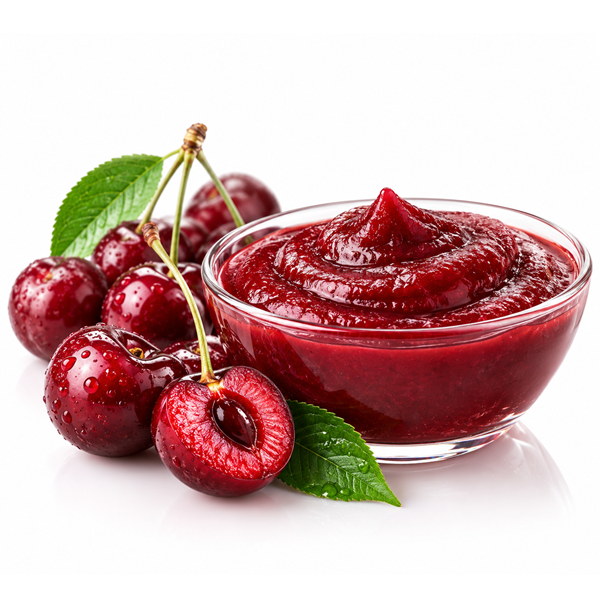
Kimia Extract Sepahan offers cherry puree as part of its range of fruit-based ingredients for the food and beverage industry. Known for its naturally sweet flavor, pleasant cherry aroma, and characteristic fruit texture, cherry puree is a versatile ingredient suitable for beverages, dairy desserts, confectionery, bakery products, and various fruit preparations. With a focus on modern processing technologies, careful raw material selection, and quality control, Kimia Extract Sepahan aims to provide reliable fruit-based ingredients for industrial manufacturers. Our cherry puree offers a practical solution for developing food products that require authentic sweet cherry flavor, appealing fruit characteristics, and consistent texture.
Advanced Processing
Modern equipment and reliable fruit processing methods
Quality Controlled
Carefully monitored production for consistent product quality
Product Consultation
Guidance to help customers select suitable fruit concentrates
Industrial Packaging
Packaging solutions suited to industrial product requirements
Cherry Puree: Features and Applications
Cherry puree is a fruit-based ingredient produced by processing ripe sweet cherries into a smooth or pulpy mixture. The manufacturing process typically involves washing, sorting, removing stems and pits, crushing, and refining the fruit pulp to achieve the desired consistency.
Unlike clarified cherry juice, cherry puree retains more of the edible fruit material, providing a thicker texture and a fuller fruit character. Its naturally sweet taste, distinctive cherry aroma, and attractive appearance make it suitable for various food and beverage applications.
Characteristics of Cherry Puree
Cherry puree is recognized for its naturally sweet flavor, pleasant fruit aroma, and smooth consistency. Its characteristics depend on the cherry variety, fruit ripeness, processing methods, and the amount of pulp retained during manufacturing.
The appearance of cherry puree can range from golden red to bright red or deep burgundy, depending on the cherry variety and processing conditions. Dark-colored sweet cherries may produce a deeper red puree, while lighter varieties can result in a paler appearance.
Cherry puree contains naturally occurring fruit sugars, primarily glucose and fructose, along with organic acids and other fruit components. Its pulp content and consistency make it suitable for formulations requiring authentic fruit flavor and a smooth, fruit-based texture.
Nutritional Properties of Cherry Puree
Sweet cherries naturally contain carbohydrates, organic acids, potassium, and various plant compounds, including polyphenols and anthocyanins.
Some of these components may remain in cherry puree after processing. However, their concentrations depend on the cherry variety, raw material quality, processing temperatures, and manufacturing techniques.
Anthocyanins contribute to the red and purple pigmentation of many cherry varieties. Their retention in the finished puree may vary depending on processing and storage conditions.
Compared with clarified cherry juice, cherry puree may retain more dietary fiber because it contains a greater proportion of edible fruit solids.
Because cherry puree contains naturally occurring sugars, its nutritional composition should be evaluated using verified product specifications rather than values associated with fresh cherries.
Industrial Applications of Cherry Puree
Cherry puree is widely used in various food and beverage manufacturing applications, including:
- Beverages: Cherry smoothies, fruit nectars, blended drinks, and fruit-based beverages.
- Dairy Products: Flavored yogurt, ice cream, frozen desserts, and dairy preparations.
- Confectionery: Fruit candies, jellies, gummies, and cherry-flavored sweet snacks.
- Bakery Products: Cakes, pastries, muffins, and cherry fruit fillings.
- Fruit Preparations: Jams, fruit sauces, dessert toppings, and cherry-based fillings.
- Frozen Desserts: Sorbets, fruit ice creams, and frozen fruit preparations.
Storage and Handling
Cherry puree should be stored under the temperature and handling conditions specified in its approved technical documentation. Appropriate storage helps maintain its natural flavor, aroma, color, texture, and overall quality.
Suitable food-grade packaging helps protect the puree during industrial storage, transportation, and handling. Storage temperature, shelf life, and packaging requirements depend on the processing method, product formulation, and approved technical specifications.
Physical & Chemical Properties
| Parameter | Specification |
|---|---|
| Brix (°Bx) | As per product specification |
| Density | As per product specification |
| Total Ash Content | As per product specification |
| Titratable Acidity (as Malic Acid) | As per product specification |
| pH | As per product specification |
| Viscosity | As per product specification |
| Ethyl Alcohol (Ethanol) | As per product specification |
Optical & Sensory Properties
| Parameter | Specification |
|---|---|
| Appearance and Color | As per product specification |
| Taste | Characteristic Sweet Cherry Flavor |
| Odor | Natural Sweet Cherry Aroma |
| Consistency / Texture | As per product specification |
| Pulp Content | As per product specification |
| Particle Size | As per product specification |
| Color Intensity | As per product specification |
Storage & Packaging
| Parameter | Specification |
|---|---|
| Storage Temperature | As per product specification |
| Shelf Life | As per product specification |
| Packaging | As per packaging specification |
| Net Weight | As per packaging specification |
| Gross Weight | As per packaging specification |
Microbiological Specifications
| Parameter | Specification |
|---|---|
| Total Plate Count (CFU/g) | As per product specification |
| Yeast and Mold Count (CFU/g) | As per product specification |
| Acid-Resistant Bacteria (CFU/g) | As per product specification |
| Coliforms (MPN/100mL) | As per product specification |
Note: All physical, chemical, sensory, microbiological, storage, and packaging specifications must be confirmed against the manufacturer’s approved product technical data sheet. Product characteristics may vary depending on the sweet cherry variety, pulp content, and processing method.
No comment