


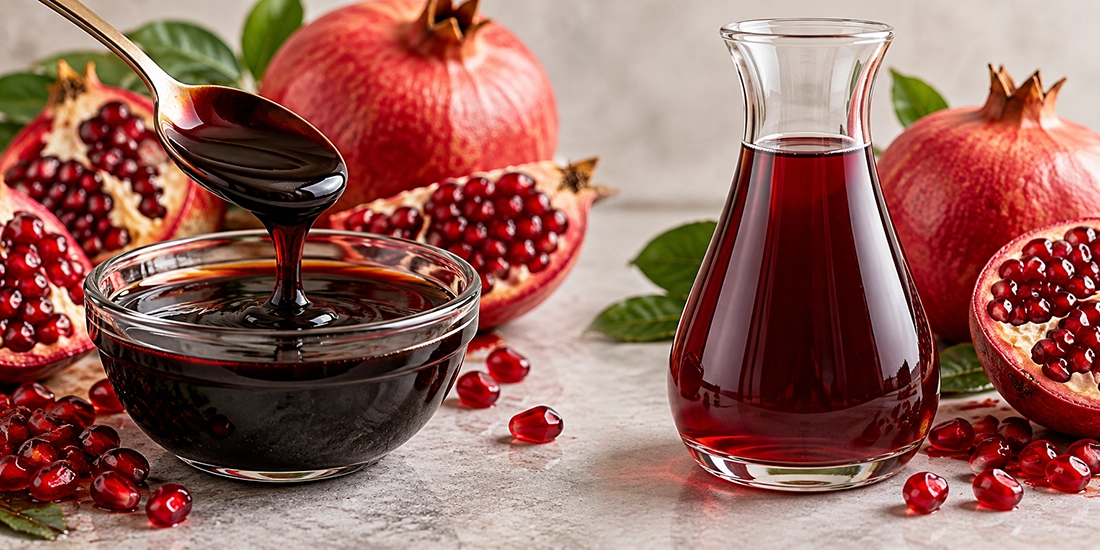
Pomegranate Molasses vs. Pomegranate Concentrate
Pomegranate molasses and pomegranate concentrate are two fruit-based products derived from pomegranates. Although they share a common raw material, their characteristics, production requirements, and applications can differ significantly.
Understanding these differences is important for food manufacturers, distributors, and buyers who need to select the appropriate ingredient for specific products.
What Is Pomegranate Molasses?
Pomegranate molasses, often referred to as pomegranate paste in some markets, is a thick product traditionally made by reducing pomegranate juice through heating.
It usually has a distinctive sweet and tart flavor, with a relatively thick consistency that makes it suitable for culinary applications.
Depending on the recipe and manufacturing method, some commercial products may also contain added sugar or other ingredients. Therefore, reviewing the ingredient declaration is important when comparing different products.
Pomegranate molasses is commonly used in sauces, marinades, salad dressings, traditional dishes, and certain prepared foods.
What Is Pomegranate Concentrate?
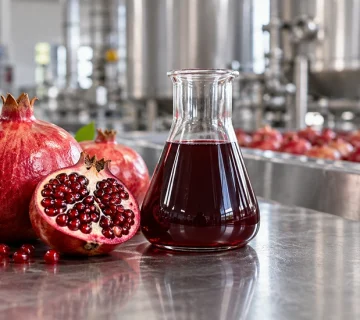
Pomegranate concentrate is generally produced by removing water from pomegranate juice under controlled industrial conditions.
The concentration process increases soluble solids content and reduces the volume of the original juice.
Industrial concentrates are commonly supplied according to technical specifications, which may include Brix level, acidity, color, and microbiological requirements.
Pomegranate concentrate is frequently used in beverage production, juice blends, fruit preparations, and other industrial food formulations.
Key Differences Between the Products
The primary differences between pomegranate molasses and pomegranate concentrate relate to their intended applications, flavor characteristics, and manufacturing specifications.
Pomegranate molasses is typically associated with culinary uses where thickness and a pronounced sweet and sour flavor are important.
Pomegranate concentrate is often selected for industrial processing because manufacturers can use its technical specifications to develop consistent formulations.
However, these categories can overlap, and terminology may vary across markets. Brix level or thickness alone is not sufficient to identify a product.
How to Choose the Right Product
For sauces, marinades, and ready-to-use culinary applications, pomegranate molasses may be the more suitable option.
For juices, beverage blends, and industrial fruit-based formulations, pomegranate concentrate may offer greater flexibility.
Buyers should evaluate ingredient composition, flavor, acidity, concentration, packaging, and intended processing conditions before making a decision.
Conclusion
Both pomegranate molasses and pomegranate concentrate are valuable products in the food industry, but they are not necessarily interchangeable.
Understanding their composition, processing methods, and intended applications enables manufacturers to select the most suitable pomegranate ingredient for their specific production needs.
No comment