


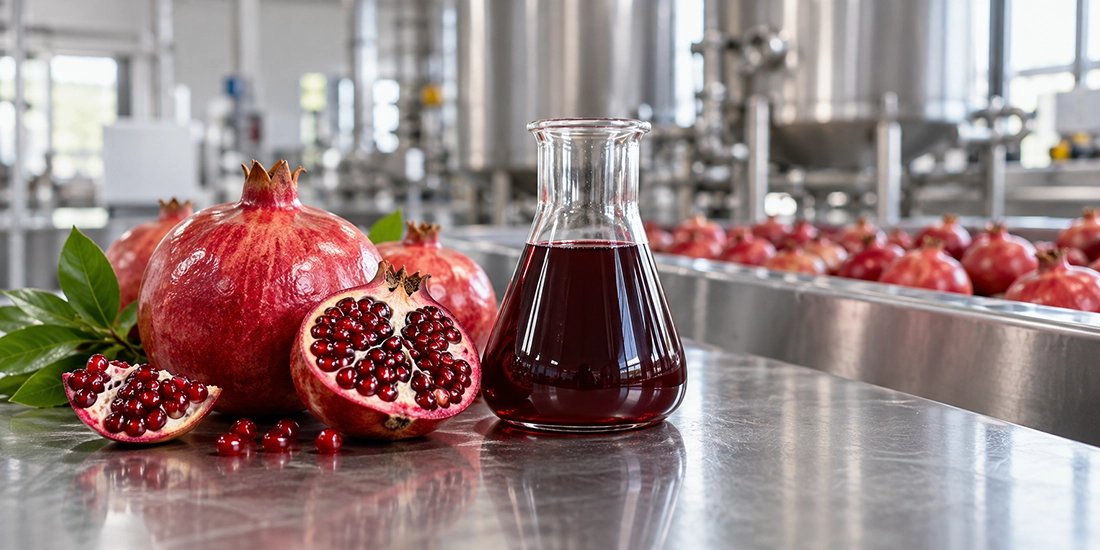
Pomegranate Concentrate: Benefits and Industrial Uses
Pomegranate concentrate is a widely used fruit-based ingredient in the food and beverage industry. It is produced by removing a significant portion of the water from pomegranate juice, resulting in a concentrated product with a distinctive flavor, rich color, and higher soluble solids content. Its characteristic sweet and tart taste makes it a valuable ingredient in various food formulations.
What Is Pomegranate Concentrate?
Pomegranate concentrate is obtained through several processing stages, including fruit selection, washing, juice extraction, filtration, and concentration. During production, controlled evaporation techniques are commonly used to reduce water content while maintaining the desired characteristics of the juice.
The final product typically has a deep red color and a concentrated flavor profile. Its specifications, including Brix level, acidity, and color intensity, can vary depending on the pomegranate variety and processing conditions.
Applications in the Beverage Industry
One of the primary uses of pomegranate concentrate is in beverage manufacturing. It serves as an ingredient in fruit juices, juice blends, flavored drinks, syrups, and other beverage formulations.
Manufacturers can adjust the concentration to achieve their desired flavor intensity and soluble solids content. Its distinctive taste also makes it suitable for combining with other fruit ingredients, such as apple and grape concentrates.
Uses in Food Manufacturing
Beyond beverages, pomegranate concentrate has applications in sauces, dressings, fruit preparations, confectionery, and certain dessert products.
Its naturally occurring pigments can contribute to the appearance of food products, although color stability depends on processing conditions, acidity, and storage.
The combination of sweetness and acidity allows manufacturers to develop different flavor profiles, particularly in products requiring a distinctive fruity character.
Advantages for Industrial Manufacturers
Concentrated fruit ingredients offer several practical advantages for food manufacturers. Compared with single-strength juice, pomegranate concentrate requires less storage space and can reduce transportation volume.
It also allows manufacturers to incorporate pomegranate flavor into products without introducing the same quantity of water associated with regular juice.
However, proper storage, handling, and formulation are essential to maintaining product quality.
Conclusion
Pomegranate concentrate is a versatile ingredient for manufacturers seeking distinctive fruit flavors and flexible formulation options. Its applications extend from beverages to sauces and confectionery products.
Understanding its technical specifications, processing methods, and storage requirements helps food manufacturers select suitable ingredients and maintain consistent product quality.
No comment